Most developers today have two choices.
Either they deploy everything manually on their own VPS and deal with infrastructure complexity themselves, or they hand over their applications to modern platforms that make deployment easy — but slowly take away ownership.
Over time, we kept seeing the same pattern.
Teams started on simple platforms because the experience was fast and convenient. But as products grew, so did the problems:
- unpredictable monthly costs,
- resource-based pricing,
- infrastructure lock-in,
- operational limitations,
- and the uncomfortable feeling that the platform, not the team, controlled the environment.
At the same time, going fully self-managed often meant rebuilding operational tooling from scratch:
- deployment pipelines,
- SSL management,
- process orchestration,
- rollback handling,
- zero-downtime deploys,
- monitoring,
- and server maintenance.
For smaller teams, indie builders, freelancers, and growing startups, this gap was frustrating.
That gap became the starting point for Vessl.
What Is Vessl?
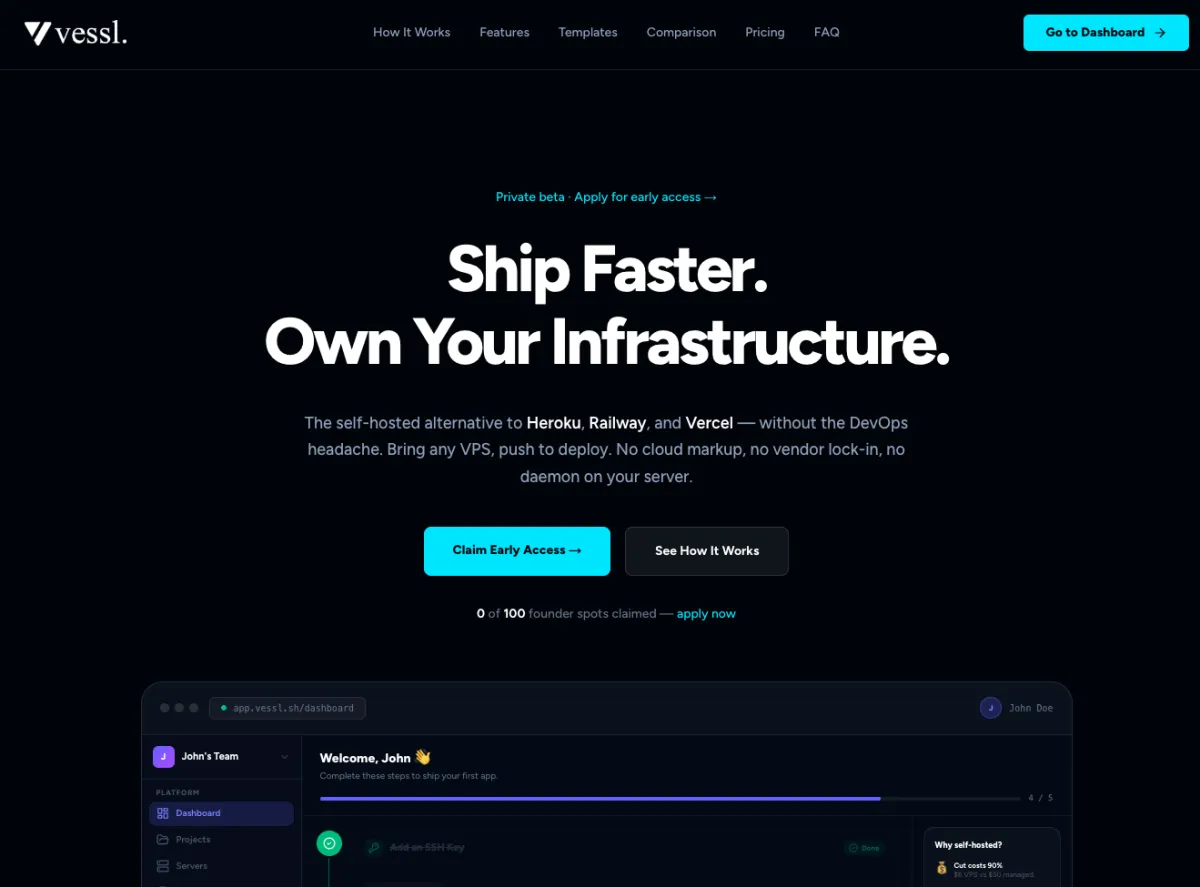
Vessl is a bring-your-own-server PaaS.
You connect your own Linux VPS, and Vessl handles the operational layer around deployments.
The infrastructure stays yours.
The applications stay on your servers.
The control stays with your team.
We wanted the experience to feel closer to a modern deployment platform while preserving the flexibility and ownership of self-hosted infrastructure.
Instead of renting another layer of infrastructure abstraction, developers can use the servers they already trust.
Why Ownership Matters
One thing we noticed while building products is that infrastructure decisions compound over time.
Early on, paying for convenience feels reasonable.
But eventually:
- costs scale with usage,
- architectural flexibility becomes constrained,
- migration becomes painful,
- and operational visibility starts disappearing behind platform abstractions.
For many teams, the issue is not cloud infrastructure itself.
The issue is losing operational ownership.
We believe there is room for a different model:
- developers own the infrastructure,
- platforms simplify operations,
- and pricing stays predictable.
That philosophy shaped nearly every decision behind Vessl.
Built From Real Operational Frustration
Vessl did not start as a theoretical startup idea.
It came from real deployment pain.
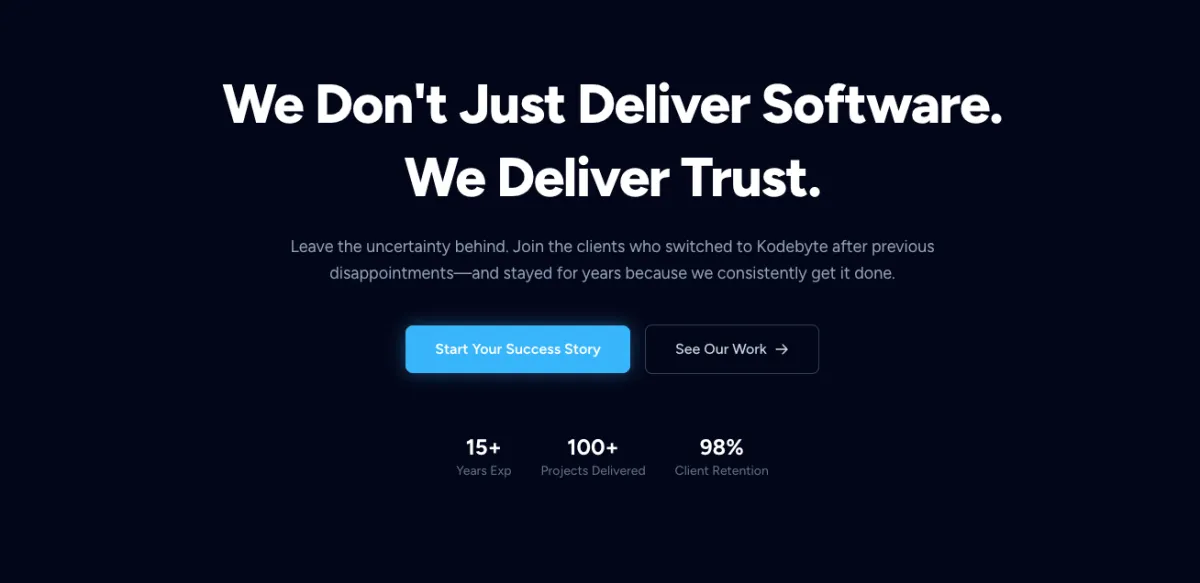
At Kodebyte, we operate multiple internal and client systems. Over time, we found ourselves repeatedly solving the same operational problems:
- configuring deployments,
- managing containers,
- handling SSL,
- coordinating updates,
- restarting services,
- recovering failed deploys,
- and maintaining consistency across servers.
The tooling ecosystem is better today than it was years ago, but we still felt there was space for something simpler:
A deployment platform designed around ownership instead of abstraction.
So we started building Vessl primarily for ourselves.
Then we realized other developers were facing the same operational trade-offs.
Dogfooding the Platform
One of the most important milestones for us was deploying our own products on Vessl.
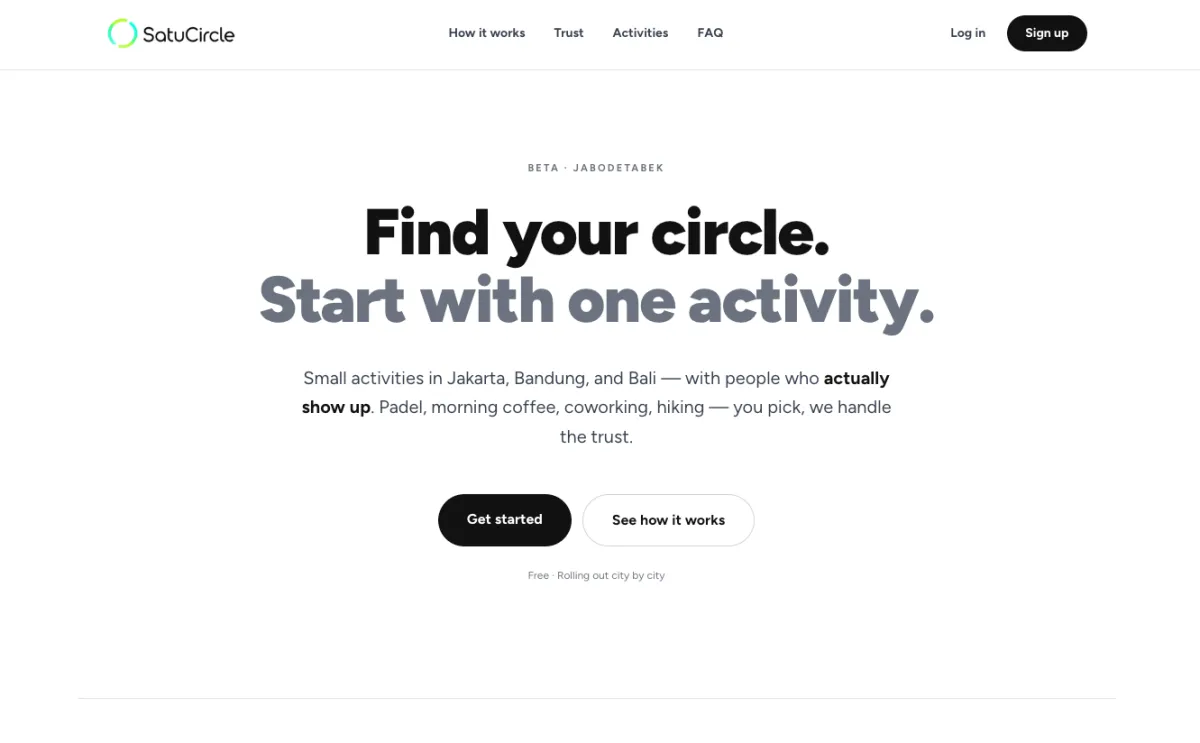
SatuCircle — our activity-first community platform — is deployed and operated through Vessl.
That matters to us because we do not want Vessl to exist only as a landing page promise.
We want it to be infrastructure we rely on ourselves.
Dogfooding changes how products evolve.
You stop building for hypothetical users.
You start fixing real deployment issues, improving operational workflows, and removing friction that directly affects your own team.
That feedback loop has already shaped many parts of the product.
What We Focused On First
We intentionally avoided trying to become an “everything platform” from day one.
Instead, the early focus for Vessl has been:
- reliable deployments,
- clean server management,
- SSL handling,
- zero-downtime updates,
- operational simplicity,
- and predictable infrastructure ownership.
There are already many tools in the infrastructure ecosystem.
Our goal is not to replace every part of the stack.
The goal is to reduce operational friction while keeping developers in control of their own infrastructure.
Building Slowly, But Intentionally
We are still early.
Vessl is evolving through real usage, operational feedback, and continuous iteration.
Right now, the focus is not aggressive scale.
The focus is clarity.
We want to understand:
- how developers actually deploy,
- where operational friction still exists,
- what smaller teams truly need,
- and how to simplify infrastructure management without removing ownership.
Some decisions may look slower from the outside.
But we believe infrastructure products become stronger when they are shaped through real operational experience instead of feature accumulation.
The Long-Term Direction
We believe more developers will eventually want:
- operational simplicity,
- infrastructure portability,
- predictable pricing,
- and independence from heavy platform lock-in.
Modern deployment workflows should not require giving up ownership.
That is the direction we want Vessl to move toward.
Not as another layer of complexity.
But as a calmer operational layer for teams that want to keep control of their infrastructure.
Built by Kodebyte
Vessl is built by Kodebyte, an independent product studio focused on practical software systems.
We care deeply about products that solve operational problems in realistic ways.
Not every tool needs to become a giant platform.
Sometimes the best infrastructure products are the ones that quietly remove friction and let teams focus on building.
That is what we are trying to build with Vessl.
visit https://vessl.sh for more info.